


Most go-to-market problems are not strategy problems. They are architecture problems. The decisions that determine whether a revenue organization compounds or plateaus are not made in the QBR or the pipeline review; they are made in how the system underneath the motion was designed, sequenced, and built.
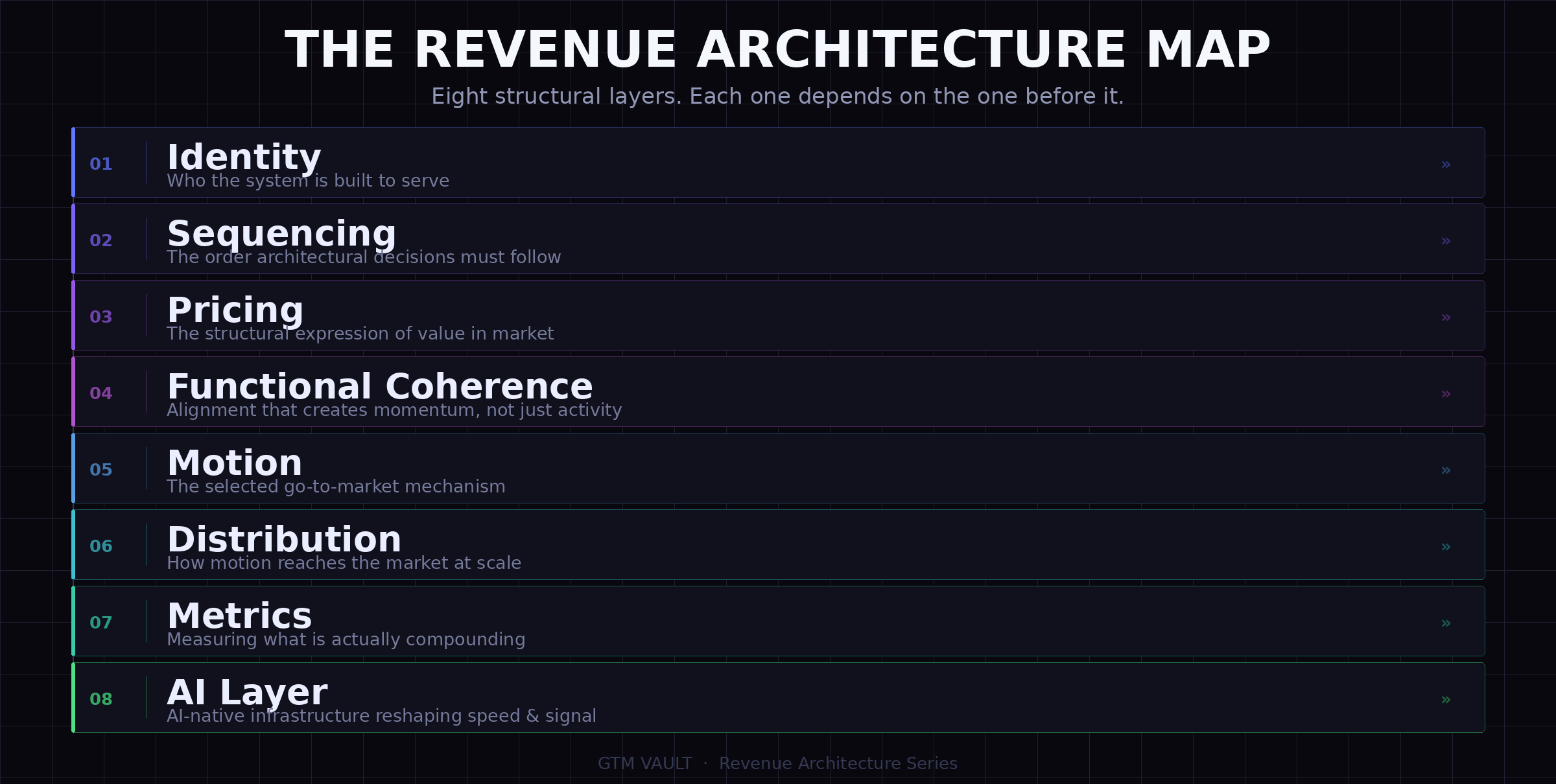
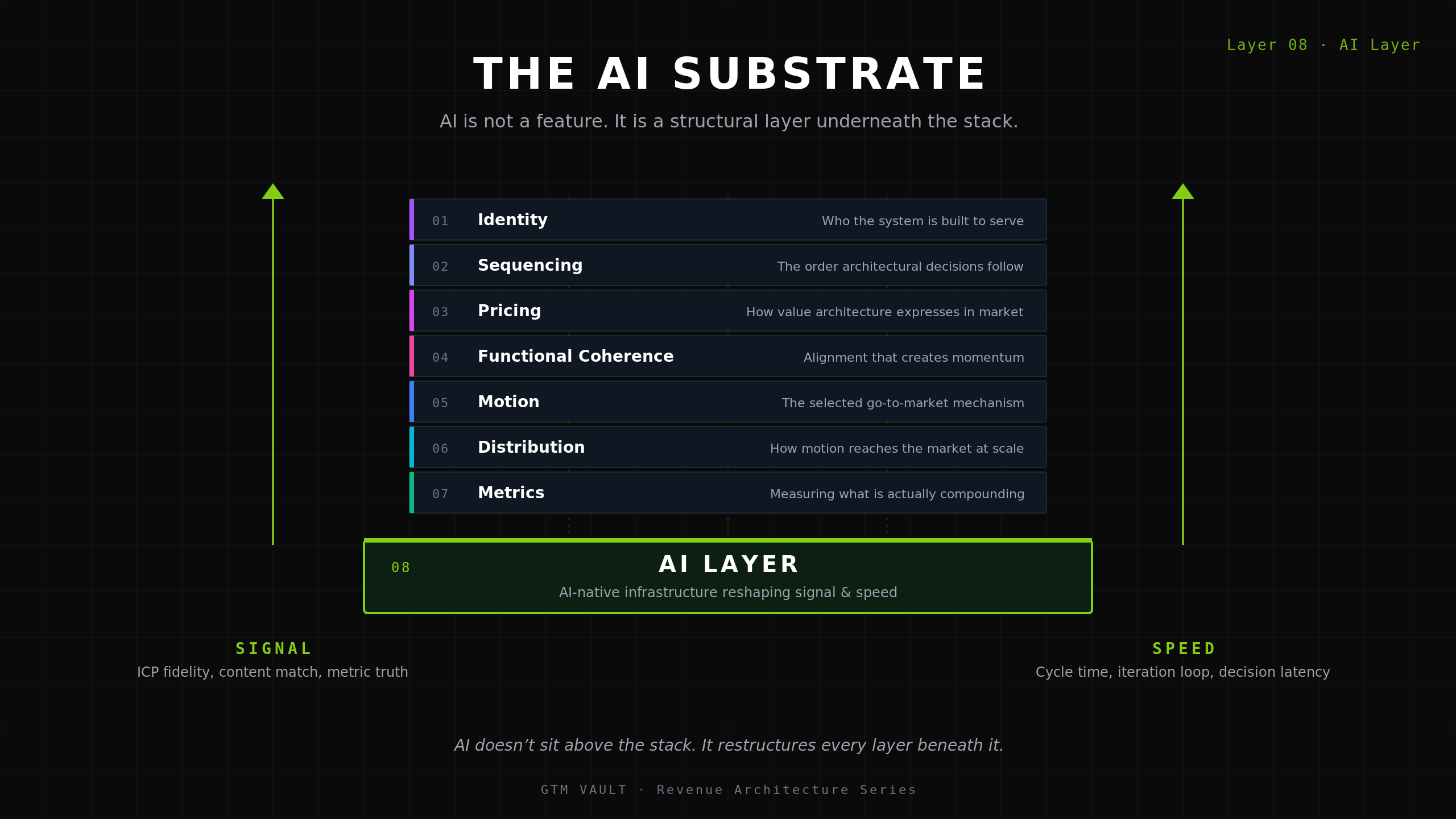
The GTM Architecture Laws are a numbered, sequential framework for diagnosing and correcting the structural failures that cause GTM organizations to produce effort without compounding output. Each law addresses a distinct architectural layer. Each one builds on the one before it. They follow the architectural sequence established in The Revenue Architecture Map.
Layer 01 · Identity
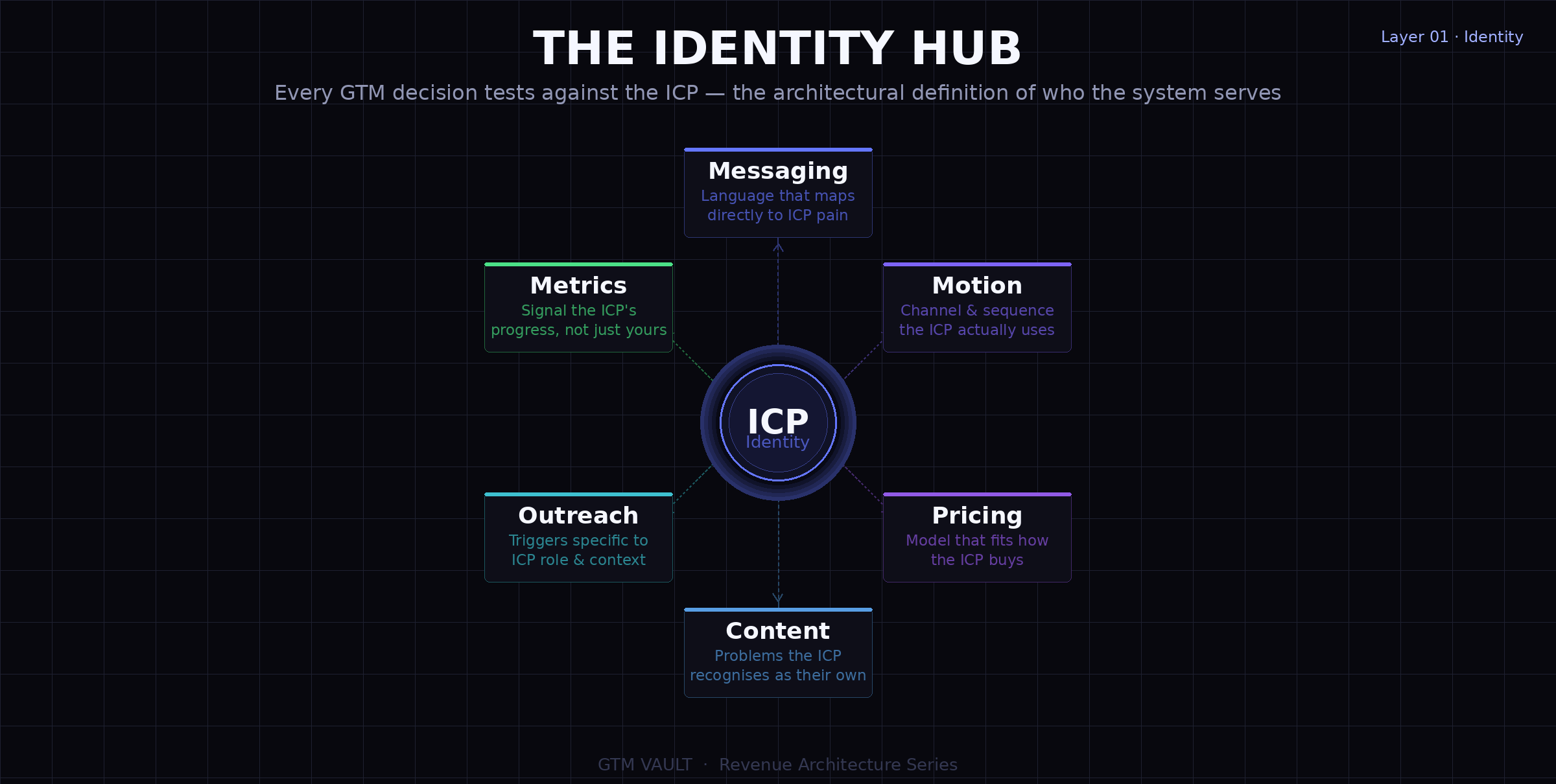
Every Downstream Decision Inherits the ICP
ICP is not a targeting filter. It is the architectural definition against which every go-to-market decision must be made.
Layer 02 · Sequencing
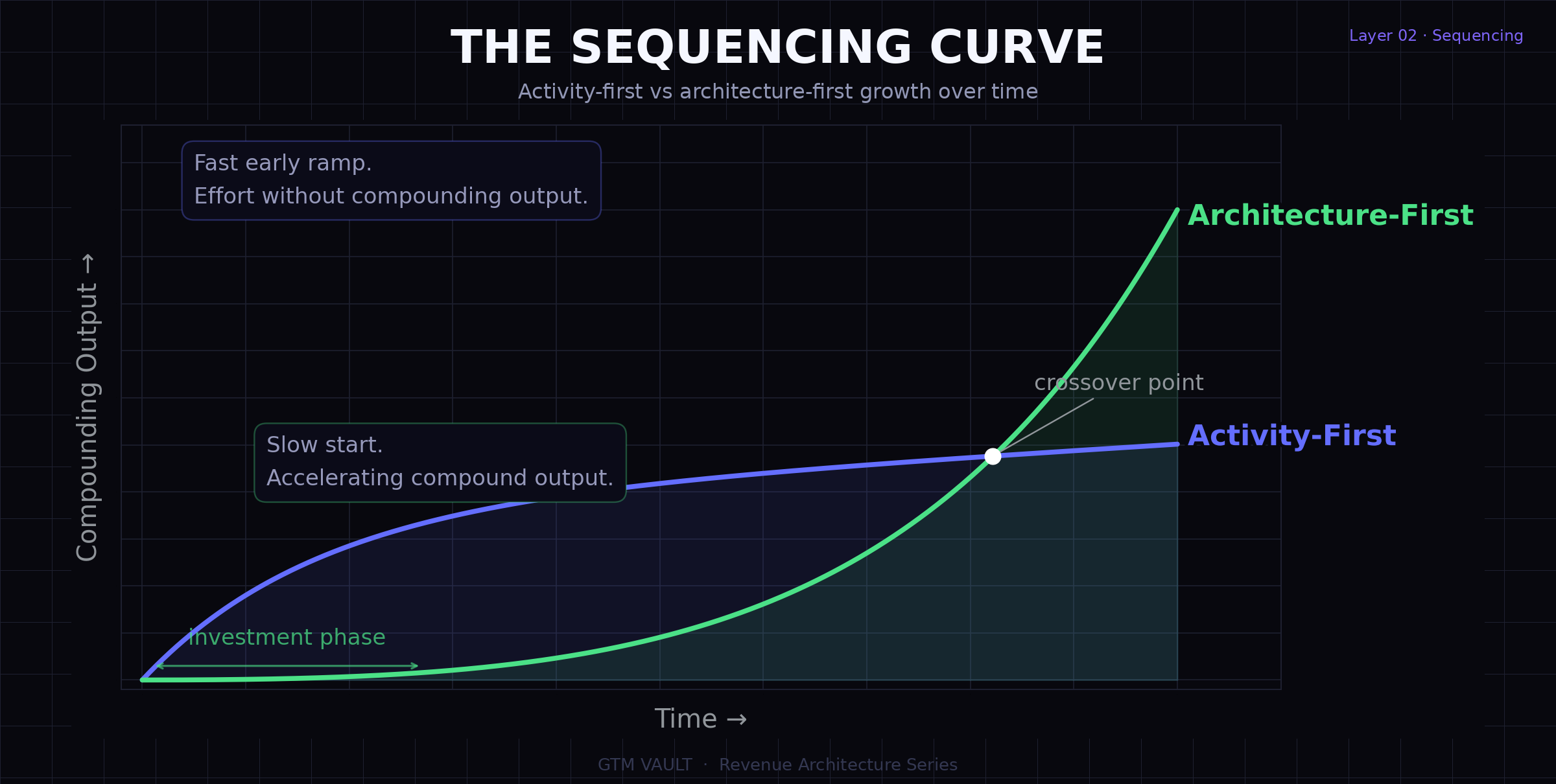
What Scales First Constrains Everything After
Expansion before architectural readiness is not growth. It is a structural violation that accelerates the distance between effort and output.
Layer 03 · Pricing
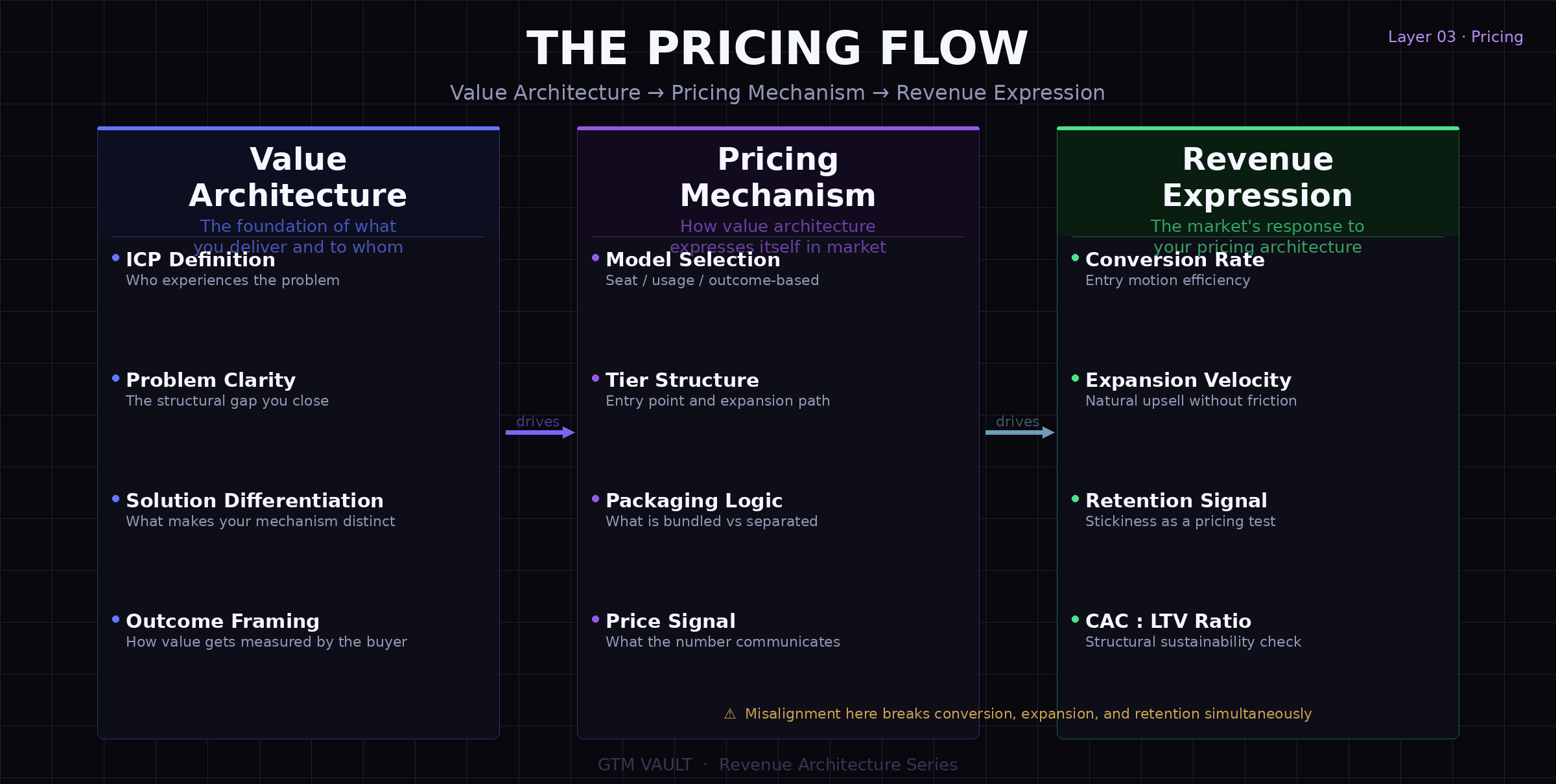
Pricing Restructures Every Layer It Touches
Pricing is not a revenue lever. It is the mechanism through which value architecture expresses itself in the market.
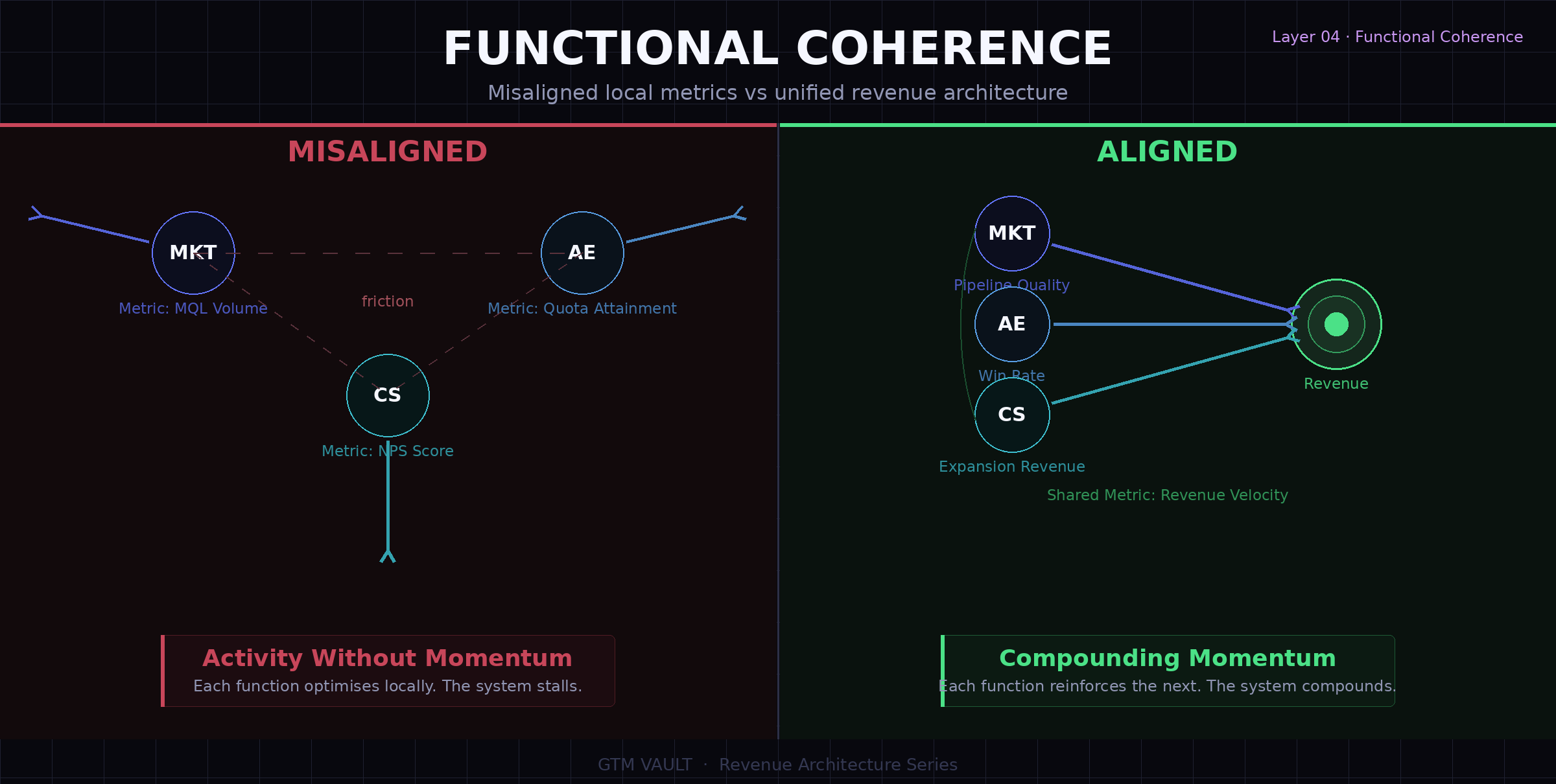
Layer 04 · Functional Coherence
Function-Level Optimization Is System-Level Debt
When GTM functions optimize locally without architectural alignment, the organization produces dilution regardless of individual performance.
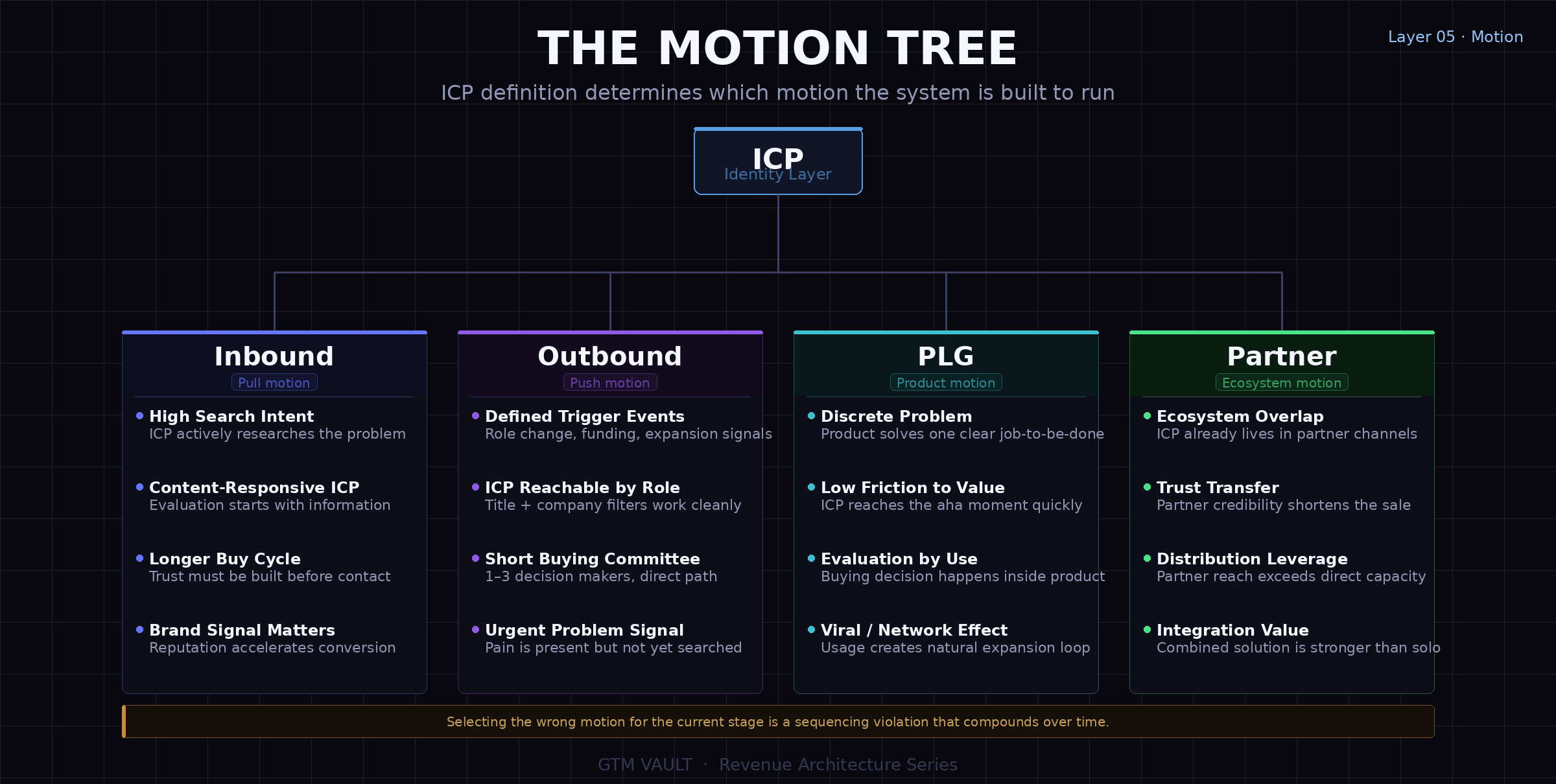
Layer 05 · Motion
Every Playbook Encodes the Stage It Was Built For
A motion tells the organization where to apply force. A system is what makes that force repeatable, transferable, and compounding.
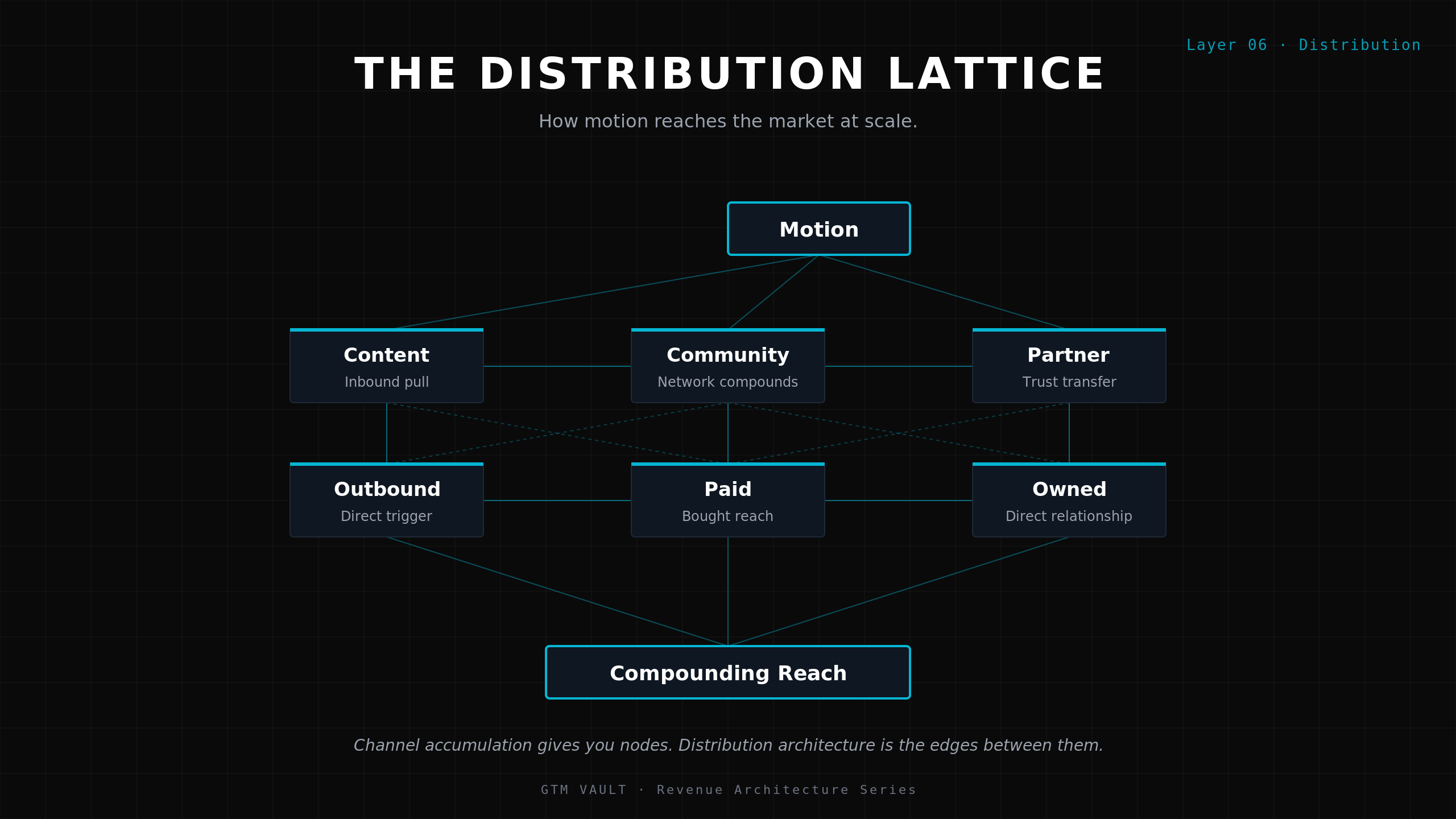
Layer 06 · Distribution
Channel Accumulation Is Not Distribution Architecture
Distribution is not a channel decision. It is the architectural layer that determines whether GTM spend compounds across every channel or accumulates as disconnected activity.
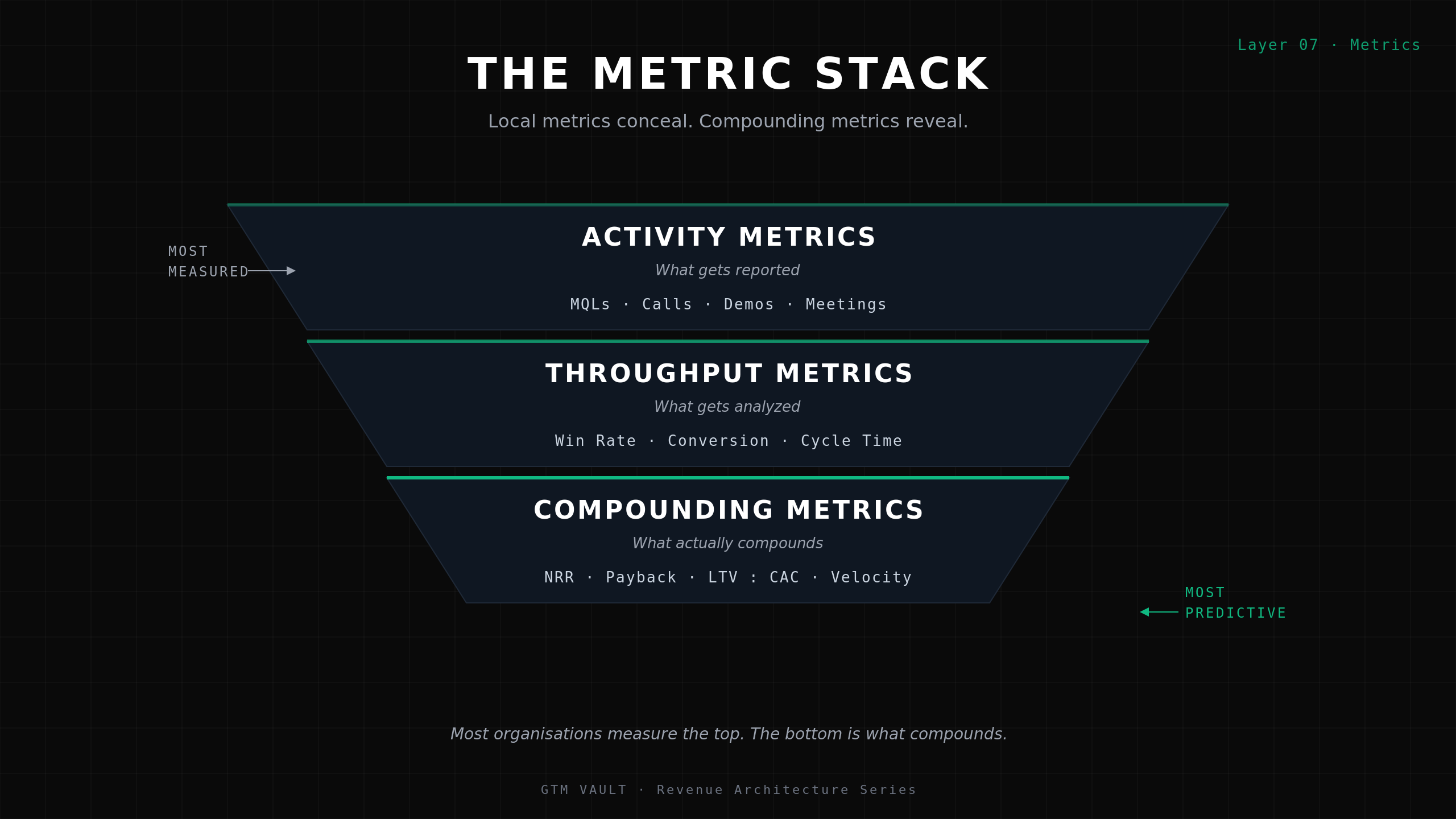
Layer 07 · Metrics
Every Metric Compounds or Conceals
What it means to measure compounding versus measuring activity, why local metrics create the illusion of progress, what the right signal looks like.
Layer 08 · AI Layer
AI Amplifies the Architecture It Inherits
If the system is fragmented, AI scales fragmentation. If the system is coherent, AI compounds it.
Each law ends with a handoff to the next.