


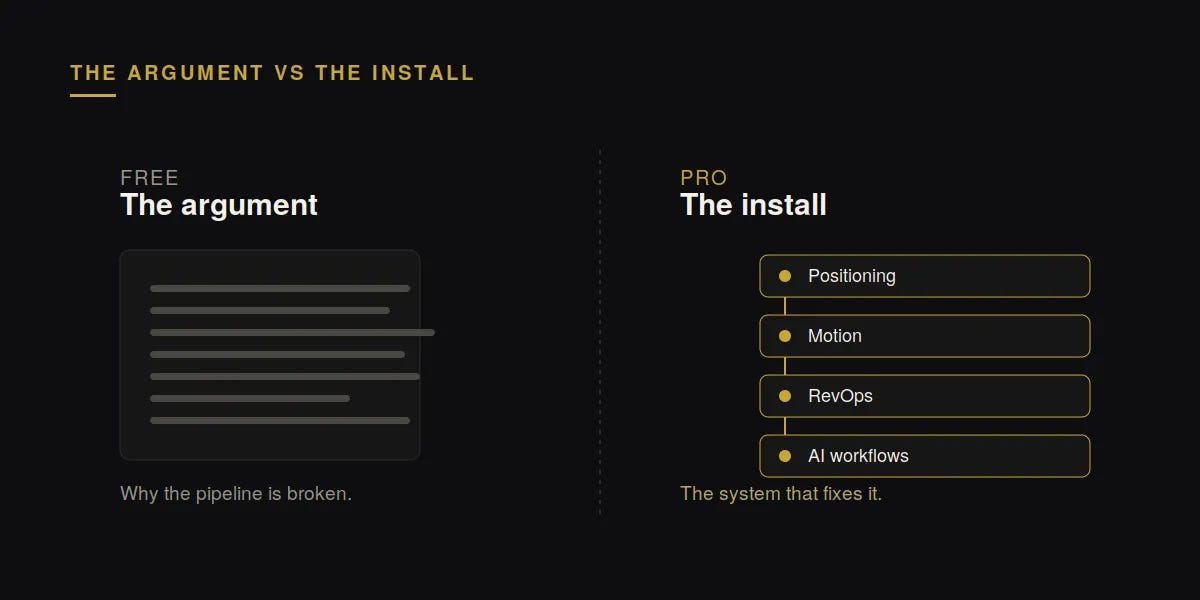
The free publication is the argument. Every week it makes the same case from a different angle: revenue problems at working companies are structural, not effort problems. When the product works and the pipeline does not, the constraint is the architecture, not the activity.
Reading the argument is not the same as installing the system. That is the line Pro crosses.
Free readers get the doctrine. Pro members get the frameworks, the configs, the diagrams, and the sequencing behind it, the actual instructions for building the motion instead of the description of why it works. If the essays have told you what is broken, Pro is where you fix it.
“A must-read for anyone driving growth, this newsletter offers sharp insights on GTM strategy, covering inbound/outbound tactics, ideal customer profiles, and key growth metrics.”
— Sean Ellis, Founder of GrowthHackers
Read inside OpenAI, Anthropic, Meta, and Google, alongside more than 26,000 founders and revenue leaders running GTM systems inside their own companies.
GTM Vault is read by 26,000+ founders and revenue leaders across 140+ countries, including inside OpenAI, Anthropic, Meta, and Google.
The Doctrine, in full
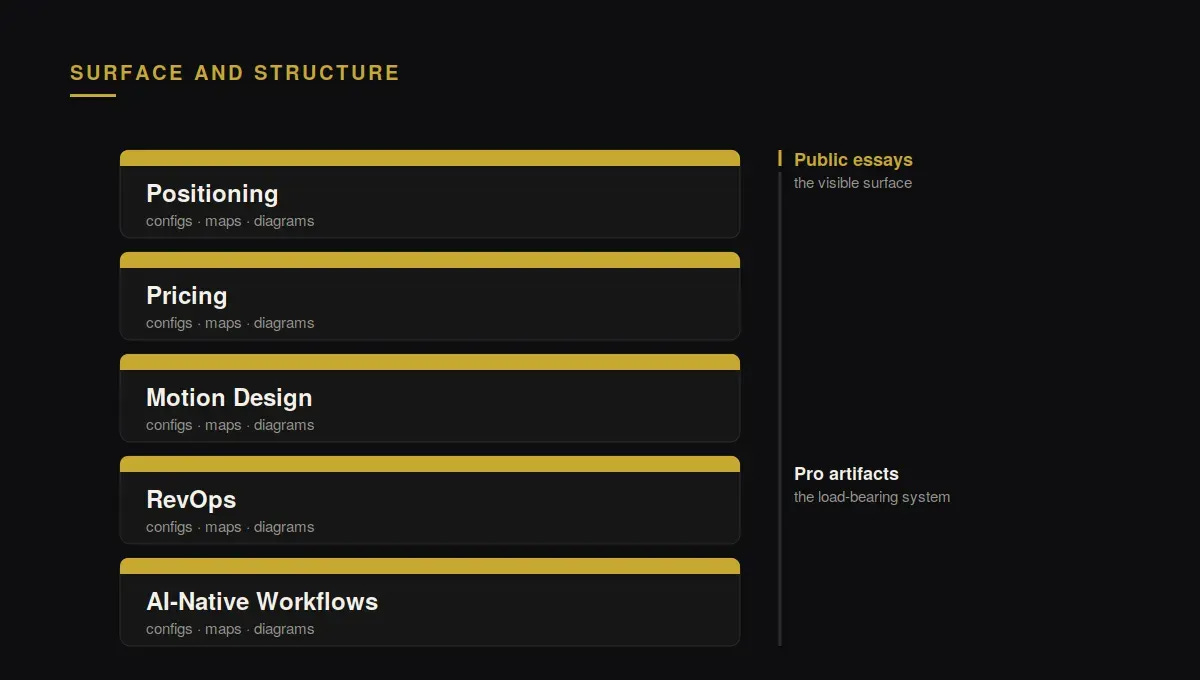
Pro opens the complete archive. Every Foundational Law, every Architecture piece, and the working artifacts underneath them: the frameworks I run, the RevOps instrumentation maps, the sequencing logic, and the diagrams that show what gets built in what order. The free essays state the principle. The Doctrine gives you the version you can install, including the parts I hold back from public posts because they only make sense with the full system around them.
The GTM Strategy Course
Ten chapters, sequenced the way the build actually happens. Not a library of tactics to pick from, a path. It starts at positioning and pricing, moves through motion design and RevOps, and ends at the AI-native workflows that execute the motion. The order is the point. The same tools installed in the wrong sequence produce fragmentation instead of compounding, and the course is built so you install them in the order that compounds.

The Blueprint Session
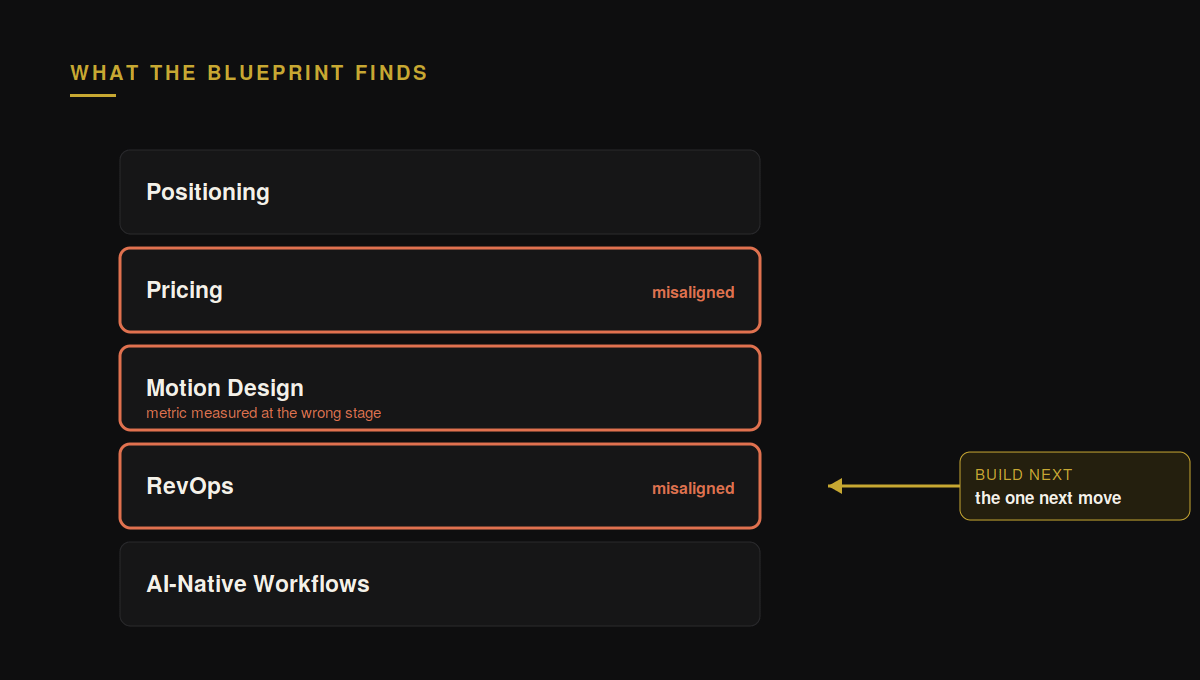
This is the reason most members upgrade. The Blueprint Session is a direct diagnostic of your own revenue architecture: where the layers are misaligned, which metric you are measuring at the wrong stage, and what to build next. Upgrading to annual opens it. You will get an email with the intake form the moment your membership starts, and the form itself is the qualifier. Completing it is how the session gets scoped to your system rather than a generic call.
Who this is for
This is for teams where CAC is rising, win rates are softening, or headcount is scaling faster than system coherence. If your product works and your pipeline does not, the constraint is structural, and Pro is built to work that constraint.
It is not for awareness-stage reading, and it is not for companies still searching for product-market fit. If you are earlier than that, the free publication is the right place to stay, and it is one click.
What upgrading does
Annual membership unlocks the Doctrine and the Course immediately, and triggers the Blueprint intake in your inbox. There is no call to book and no form to chase down. You upgrade, the system opens, and the intake finds you.
If your pipeline has stopped compounding and you already know the problem is not effort, this is the step that turns the reading into a build.
Common questions
What is revenue architecture?
Revenue architecture is the structural design of a company’s revenue system: how positioning, pricing, motion design, RevOps, and AI-native workflows fit together, and in what order they get built. It is not a tool choice and not a growth tactic. The core claim is that revenue problems at working companies are usually structural, not effort problems: when the product works and the pipeline does not, the constraint is the architecture, not the activity. Revenue architecture treats sequencing as the first decision, because the same tools installed in the wrong order produce fragmentation instead of compounding.
What does GTM Vault Pro include?
Pro is an annual membership. It unlocks three things: the full Doctrine archive, including every Foundational Law and Architecture piece plus the frameworks, configs, and diagrams underneath them; the ten-chapter GTM Strategy Course, sequenced in build order; and the Blueprint Session, a direct diagnostic of your own revenue architecture.
What is the Blueprint Session?
The Blueprint Session is a scoped diagnostic of your company’s revenue architecture. It identifies where your layers are misaligned, which metric you are measuring at the wrong stage, and the single next thing to build. It is scoped to your system through an intake form rather than run as a generic call.
How do I get the Blueprint intake form?
Upgrading to annual Pro triggers it automatically. You receive an email with the intake form the moment your membership starts. The form is the qualifier, completing it is how the session gets scoped to your architecture. There is no separate call to book.
Is Pro monthly or annual?
Pro is annual. The annual commitment is what opens the Blueprint intake, since the session is built for members installing the system over a full cycle, not sampling it.
What is the difference between the free publication and Pro?
The free publication is the argument: the weekly case that revenue problems are structural, not effort problems. Pro is the install: the frameworks, sequencing, and diagnostic that turn the argument into a system you build inside your own company. Free explains the architecture. Pro hands you the parts and the order.
Who should not upgrade?
Pro is not for awareness-stage reading and not for companies still searching for product-market fit. If your product does not yet work, the constraint is not architecture, and the free publication is the right place to stay.
Explore GTM Vault
The free publication runs across five sections. Start wherever your problem lives.
GTM Vault Podcast · operators on how they built the motion.
Show Me Your Stack · the real tools and configs behind working GTM systems.
Foundational Laws · the structural principles under every AI-native GTM motion.
GTM Architecture · how the layers fit together, and in what order they get built.
GTM Playbooks · the applied builds, end to end.